Businesses that operate multiple vehicles eventually need to replace ageing cars, vans, lorries, or buses. As vehicles become less reliable, maintenance costs increase, or operational requirements change, deciding what to do with them becomes an important part of fleet management.
In Singapore, fleet vehicle disposal requires careful planning. Business owners must consider vehicle condition, remaining Certificate of Entitlement (COE), deregistration requirements, potential scrap value, and whether exporting or scrapping is the more suitable option.
A structured approach helps businesses manage disposal costs, reduce operational disruption, and make informed decisions about their end-of-life vehicles.
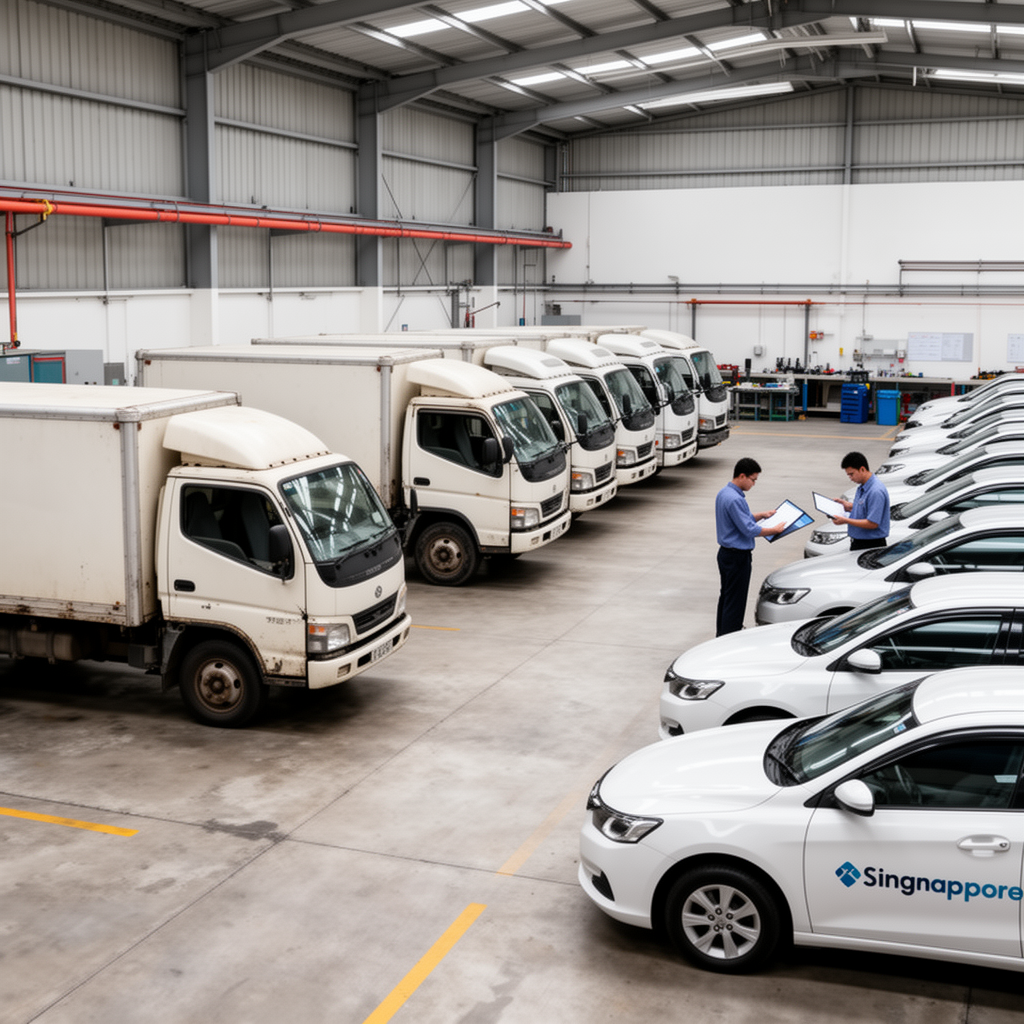
This guide explains the key considerations for fleet vehicle disposal in Singapore and offers practical steps businesses can follow when retiring commercial vehicles.
Table of Contents
- What Is Fleet Vehicle Disposal?
- When Should a Business Dispose of Its Fleet Vehicles?
- Scrapping Versus Exporting Fleet Vehicles
- Important Documents and Information to Prepare
- How to Evaluate the Value of Fleet Vehicles
- Planning Fleet Disposal to Minimise Disruption
- Environmental Considerations in Vehicle Disposal
- Common Fleet Disposal Mistakes
- A Practical Fleet Disposal Checklist
- Frequently Asked Questions
- Conclusion
1. What Is Fleet Vehicle Disposal?
Fleet vehicle disposal refers to the process of retiring vehicles that a business owns or operates. These vehicles may include company cars, delivery vans, commercial lorries, buses, and specialised transport vehicles.
Disposal can involve selling a vehicle, transferring ownership, scrapping it, or arranging export where permitted and commercially appropriate.
For businesses with only one or two vehicles, disposal may be a relatively straightforward task. Companies operating larger fleets, however, need to coordinate vehicle replacement, operational schedules, financial records, and regulatory requirements.
A well-managed disposal process should establish which vehicles need to be retired, when they should leave service, what options are available, and how each transaction will be documented.
2. When Should a Business Dispose of Its Fleet Vehicles?
There is no single disposal date that suits every vehicle. Businesses should evaluate the condition, operating costs, and remaining useful life of each vehicle.
Rising Maintenance Costs
Older vehicles may require increasingly frequent repairs. If maintenance expenses and downtime begin to outweigh the benefits of keeping a vehicle, replacement may become a more practical option.
Businesses should examine repair invoices, servicing frequency, breakdown records, and the impact of vehicle downtime on customer deliveries.
A vehicle that repeatedly interrupts operations can create indirect costs beyond the workshop bill itself.
Approaching COE Expiry
In Singapore, the COE is a significant consideration for vehicle ownership. As a vehicle approaches the end of its COE period, the business should review its available options and relevant deadlines.
Depending on the vehicle and applicable rules, these may include renewing the COE, selling the vehicle, or arranging deregistration and disposal.
Businesses should verify the current requirements and financial implications before deciding. They should not assume that the same option is best for every vehicle in the fleet.
Changing Business Requirements
A company may need fewer vehicles after restructuring its operations or more efficient vehicles as delivery volumes increase. Changes in routes, cargo requirements, customer demand, or operating costs can also make certain vehicles less suitable.
Disposing of vehicles that no longer meet operational needs can help a business allocate resources more effectively.
Reliability and Safety Concerns
Frequent breakdowns and unresolved mechanical problems can affect business continuity. Vehicles should be assessed according to their condition and applicable safety requirements.
If a vehicle is no longer economical or suitable to operate, the business should evaluate whether repair, replacement, or disposal makes the most sense.
3. Scrapping Versus Exporting Fleet Vehicles
When retiring a vehicle, businesses may consider scrapping or exporting, subject to the relevant regulations and eligibility conditions.
Scrapping a Fleet Vehicle
Scrapping may be appropriate when a vehicle has limited remaining commercial value, is in poor condition, or is no longer suitable for continued use.
The vehicle may have value through recoverable materials or reusable components. The amount offered will depend on factors such as vehicle type, condition, market demand, and the transaction terms.
Businesses should request a clear quotation and confirm how the disposal and deregistration arrangements will be handled.
Exporting a Fleet Vehicle
Export may be worth considering when a vehicle remains usable and there is a suitable market for it overseas.
However, export is not automatically available or more profitable. Eligibility, documentation, destination requirements, transport arrangements, and costs must all be assessed.
A business should compare the actual net return from an export transaction against a scrapping offer rather than relying on an estimated overseas selling price.
Comparing the Options
When comparing scrapping and exporting, businesses should consider:
- The vehicle’s condition and remaining useful life.
- Any applicable deregistration requirements and deadlines.
- The quotation and payment terms offered.
- Collection, transport, administrative, and other associated costs.
- Whether the vehicle is eligible for the proposed disposal method.
- The time required to complete the transaction.
For more detail, read a comprehensive guide to scrapping commercial vehicles in Singapore before deciding how to retire vans, lorries, or buses.
4. Important Documents and Information to Prepare
Preparing vehicle information in advance can make fleet disposal more efficient, especially when several vehicles are involved.
Vehicle Registration Details
Compile a list of the registration numbers, vehicle types, registration details, and relevant COE information for each vehicle.
Accurate records help the service provider identify the vehicles and allow the business to manage multiple disposal arrangements without confusing one vehicle with another.
Company Authorisation
Confirm who is authorised to approve the disposal and sign the necessary documents on behalf of the business.
Depending on the transaction, supporting company information, representative identification, or written authorisation may be required. Ask the relevant provider or authority for the current requirements.
Financing and Ownership Records
Check whether any vehicle is subject to outstanding financing or other arrangements that could affect disposal.
Contact the relevant finance provider where necessary to determine whether settlement or additional documentation is required before the transaction can proceed.
Quotation and Payment Records
Keep copies of quotations, agreements, payment confirmations, receipts, and relevant correspondence.
For fleet transactions, maintain a separate record for each vehicle, including its agreed price, collection status, and disposal documentation. This helps the finance or operations team reconcile the transactions accurately.
The exact documents required will depend on the vehicle and circumstances. Businesses should confirm the applicable requirements with the Land Transport Authority (LTA) and their appointed service provider before proceeding.
5. How to Evaluate the Value of Fleet Vehicles
A fleet disposal decision should be based on the overall financial outcome rather than a single quoted figure.
Assess Vehicle Condition
The vehicle’s mechanical condition, mileage, body condition, and availability of reusable parts can influence the commercial offer.
Businesses should provide accurate information about the vehicle and disclose known problems. Clear information makes it easier to obtain a realistic quotation.
Compare Multiple Offers
Where practical, obtain quotations from more than one suitable provider. Compare the amount offered, collection arrangements, payment timing, and any conditions or deductions.
A higher initial quotation may not produce the best result if additional charges or less favourable terms apply.
Consider the Cost of Keeping the Vehicle
Disposal value is only one part of the decision. Continued ownership may involve maintenance, insurance, operating expenses, downtime, and the cost of replacement planning.
Businesses should compare the likely cost of keeping the vehicle with the expected cost and benefit of retiring it.
Evaluate Each Vehicle Separately
Even vehicles of the same model and age may have different values because of their condition, usage, and remaining commercial usefulness.
For this reason, businesses should avoid assuming that one standard disposal price applies to every vehicle in the fleet.
6. Planning Fleet Disposal to Minimise Disruption
Poorly timed disposal can leave a business without enough vehicles to serve customers. Fleet retirement should therefore be coordinated with replacement and operational plans.
Build a Vehicle Retirement Schedule
Create a fleet register showing each vehicle’s age, COE details, maintenance history, operating role, and planned replacement date.
Review this register regularly to identify vehicles that may need attention in the coming months.
Arrange Replacement Capacity
Before retiring a vehicle, confirm whether another vehicle can take over its workload. If replacements are being purchased or leased, coordinate their availability with the disposal schedule.
For delivery businesses, transport operators, and service companies, maintaining sufficient capacity is essential to avoid delays and lost revenue.
Group Transactions Where Practical
If several vehicles are being retired, ask providers whether they can coordinate inspections, quotations, or collection schedules.
Handling multiple vehicles through a planned process can reduce administrative work. However, each vehicle’s condition, documentation, and transaction terms should still be verified individually.
Keep Accurate Internal Records
Update the fleet register when a vehicle is removed from service and track the completion of relevant disposal steps.
The finance team should also reconcile the proceeds and associated costs against the correct vehicle records.
7. Environmental Considerations in Vehicle Disposal
Responsible fleet disposal can support better resource management.
End-of-life vehicles may contain recoverable metals and components. Appropriate recycling and material recovery can reduce the need for some new raw materials and help divert usable resources from waste streams.
However, vehicles also contain materials that require proper handling, including fluids, batteries, and certain components. Businesses should use suitable service providers and ensure that disposal is conducted through appropriate channels.
Companies can also improve their environmental planning by maintaining vehicles properly, evaluating repair options carefully, and replacing vehicles according to operational needs rather than using an arbitrary schedule.
For organisations reporting sustainability performance, maintaining clear disposal records may also help document how retired fleet assets were handled.
8. Common Fleet Disposal Mistakes
Waiting Until a Deadline Is Too Close
Leaving disposal arrangements until the last minute can limit available options and increase the risk of administrative delays. Review COE information and relevant deadlines well in advance.
Comparing Only the Quoted Price
A quotation should be assessed alongside collection arrangements, payment conditions, potential deductions, and other costs.
Overlooking Company Authorisation
Make sure the person handling the transaction has the necessary authority and documentation.
Ignoring Financing Arrangements
Outstanding financing or ownership restrictions can complicate disposal. Check these matters before committing to a transaction.
Failing to Track Each Vehicle
When several vehicles are involved, incomplete records can create confusion about quotations, payments, and completion status. Maintain a clear record for each vehicle.
9. A Practical Fleet Disposal Checklist
Before disposing of a company vehicle, confirm that the following tasks have been completed:
- Identify the vehicle and review its registration and COE details.
- Assess condition, maintenance costs, and operational requirements.
- Compare suitable scrapping, sale, or export options.
- Confirm the required documents and company authorisation.
- Check financing arrangements and other ownership restrictions.
- Obtain and review the written quotation and transaction terms.
- Arrange replacement transport or alternative operational capacity.
- Confirm collection and deregistration responsibilities.
- Keep receipts, agreements, payment records, and official confirmations.
- Update the fleet register and accounting records.
For businesses disposing of several vehicles, this checklist can be adapted into a tracking sheet with a separate status for every vehicle.
10. Frequently Asked Questions
Can a Singapore company scrap several vehicles at once?
A business can explore coordinated arrangements for multiple vehicles, but the procedure and requirements will depend on each vehicle’s circumstances and the provider involved. Confirm the documentation and collection arrangements before proceeding.
Is scrapping always better than exporting?
No. The most suitable option depends on vehicle condition, eligibility, market demand, costs, and the terms available. Compare the expected net return and verify the relevant requirements.
What types of commercial vehicles can businesses dispose of?
Businesses may need to retire company cars, delivery vans, lorries, buses, and other commercial vehicles. The applicable procedure depends on the vehicle category and current regulations.
How can businesses avoid delays?
Prepare accurate vehicle records, confirm authorisation, check financing arrangements, and verify the latest requirements before scheduling collection.
Where can businesses check official deregistration requirements?
Consult the Land Transport Authority at https://www.lta.gov.sg/ for current information and confirm transaction-specific arrangements with the appointed scrapyard or authorised exporter.
11. Conclusion
Fleet vehicle disposal is an important part of managing a business’s transport assets in Singapore. By reviewing vehicle condition, monitoring COE deadlines, comparing disposal options, and preparing the necessary documentation, companies can make more informed decisions about retiring ageing vehicles.
A planned process also helps minimise operational disruption, maintain accurate financial records, and ensure that the appropriate deregistration and disposal steps are completed.
Whether a business operates a small group of delivery vans or a larger fleet of lorries, buses, and company cars, the key is to assess each vehicle carefully, compare offers based on their full terms, and verify current requirements before proceeding.
Related Articles: