Table of Contents
- Introduction
- What Is a Prime Mover in Singapore’s Logistics Industry
- Why Prime Movers Reach End-of-Life
- Scrap vs Export vs Rebuild: Key Decision Framework
- How Prime Mover Scrap Value Is Calculated
- When You Should Scrap a Prime Mover
- When Exporting a Prime Mover Makes More Sense
- When Rebuilding or Refurbishing Is Worth It
- Common Mistakes Owners Make With Prime Movers
- How to Maximise Returns Before Disposal
- Conclusion
1. Introduction
A prime mover is one of the most valuable and heavily used assets in Singapore’s logistics and transport industry. When it reaches the end of its operational life, owners face an important decision: should they scrap it, export it, or invest in rebuilding?
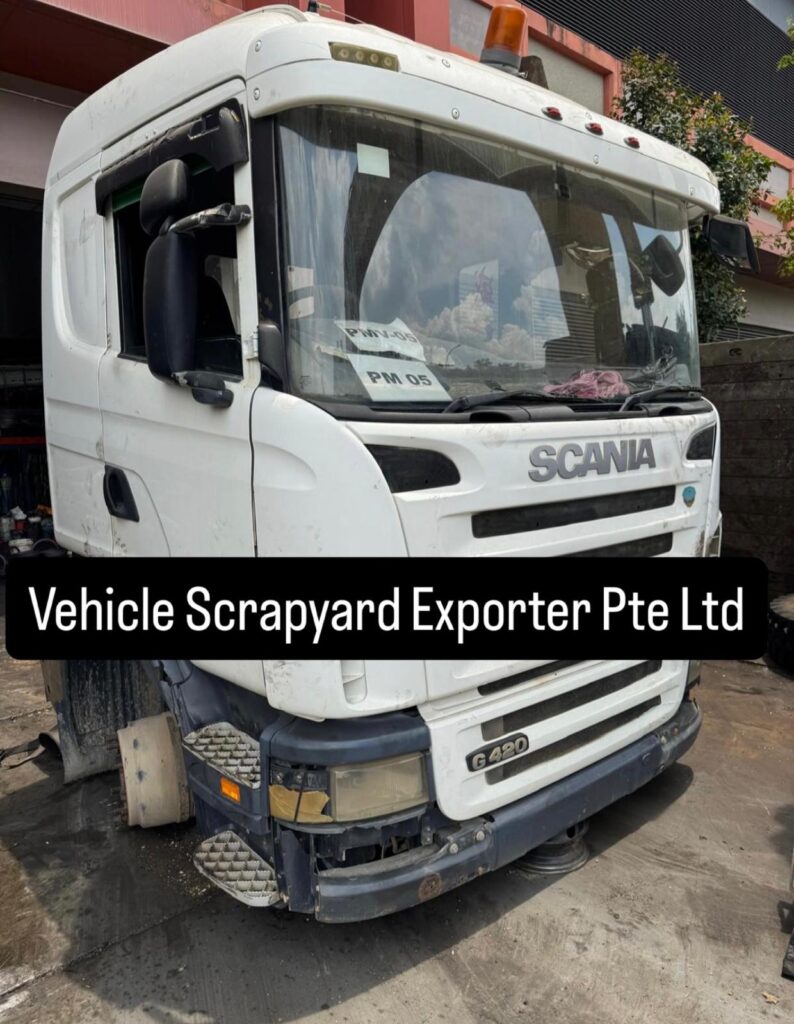
Unlike smaller vehicles, a prime mover for scrap involves higher financial stakes because of its weight, engine capacity, and commercial usage history. Making the wrong decision can mean losing thousands of dollars in potential value.
This guide explains how to evaluate a prime mover properly so you can maximise returns whether you are a fleet operator or an individual owner.
2. What Is a Prime Mover in Singapore’s Logistics Industry
A prime mover is a heavy-duty truck designed to pull trailers and containers. In Singapore, they are commonly used in:
- Port logistics and container transport
- Construction material hauling
- Cross-border freight operations
- Industrial supply chains
These vehicles are essential to Singapore’s trade ecosystem, especially due to the country’s role as a regional logistics hub.
Because of their heavy workload, prime movers typically experience faster mechanical wear compared to standard trucks.
3. Why Prime Movers Reach End-of-Life
Prime movers usually reach scrapping consideration due to:
3.1 High Mileage and Wear
Heavy-duty engines accumulate extreme mileage due to continuous hauling operations.
3.2 Expensive Repairs
Gearbox failures, turbo replacements, and axle issues can cost more than the vehicle’s remaining value.
3.3 COE Expiry
Once COE expires, renewing it for an old prime mover is often not economically viable.
3.4 Fleet Upgrading
Logistics companies frequently upgrade to newer, more fuel-efficient Euro-standard trucks.
3.5 Accident or Structural Damage
Chassis damage or major accidents can make repair impractical.
For related disposal decisions, you may refer to:
Scrap or Export: Making the Right Decision for Your Vehicle in Singapore
4. Scrap vs Export vs Rebuild: Key Decision Framework
Choosing what to do with a prime mover depends on three main factors:
Scrap
Best when:
- Vehicle is mechanically beyond repair
- Repair costs exceed market value
- No export demand for model/condition
Export
Best when:
- Engine and chassis are still in good condition
- Demand exists in overseas markets (e.g., developing logistics sectors)
- Vehicle meets export compliance standards
Rebuild / Refurbish
Best when:
- Engine or transmission can be rebuilt cost-effectively
- Fleet operator needs short-term extension of usage
- COE renewal still makes financial sense
The decision is not always obvious, and many owners lose value by choosing scrap too early.
5. How Prime Mover Scrap Value Is Calculated
Scrap value is not random—it is based on structured evaluation.
5.1 Vehicle Weight and Metal Recovery
Prime movers are extremely heavy, so base scrap value is largely determined by:
- Steel frame weight
- Aluminium components
- Engine block material
5.2 Usable Parts Value
Even for scrap vehicles, certain components can be resold:
- Diesel engines
- Gearboxes
- Differential systems
- Hydraulic or braking systems
5.3 Export Potential Adjustment
If parts or the entire vehicle can be exported, scrapyards may offer higher prices.
5.4 Market Conditions
Global steel and scrap metal prices directly affect payouts.
5.5 Brand and Model Demand
Some brands (e.g., Japanese heavy-duty trucks) retain stronger resale demand.
6. When You Should Scrap a Prime Mover
Scrapping is usually the best option when:
6.1 Repair Costs Are Too High
If a single repair exceeds a large percentage of the vehicle’s market value, scrapping becomes logical.
6.2 Engine or Chassis Failure
Structural damage is often not economically repairable.
6.3 No Export Demand
Older or heavily worn models may not attract overseas buyers.
6.4 COE Expiry with Low Residual Value
When COE renewal is too expensive relative to the truck’s condition.
6.5 Downtime Costs Are Too High
For logistics operators, downtime often costs more than scrap value loss.
7. When Exporting a Prime Mover Makes More Sense
Exporting is often overlooked but can yield higher returns.
7.1 Strong Mechanical Condition
If the engine and gearbox are still reliable, export buyers may pay a premium.
7.2 Popular Regional Models
Certain models are in demand in:
- Malaysia
- Indonesia
- Myanmar
- African logistics markets
7.3 Lower Mileage Units
Export markets prefer trucks with lower operational wear.
7.4 Compliance With Export Standards
If emissions and mechanical standards are acceptable for destination countries.
Exporting often provides better returns than scrapping because the asset retains functional value.
8. When Rebuilding or Refurbishing Is Worth It
Rebuilding a prime mover can sometimes extend its lifespan profitably.
8.1 Engine Overhaul Is Affordable
If engine rebuild costs are reasonable compared to replacement value.
8.2 Short-Term Contract Fulfilment
Some logistics companies refurbish vehicles to complete ongoing contracts.
8.3 COE Renewal Still Viable
If COE extension costs are justified by future revenue.
8.4 Fleet Strategy Considerations
Smaller operators may refurbish instead of purchasing new vehicles.
However, rebuilding is only worthwhile when long-term operational gains outweigh costs.
9. Common Mistakes Owners Make With Prime Movers
Many owners lose value due to poor decision-making:
9.1 Scrapping Without Export Evaluation
Some vehicles still have strong export demand.
9.2 Accepting First Scrap Offer
Prices vary widely between yards.
9.3 Ignoring Parts Value
Selling whole vehicle as scrap instead of stripping valuable parts.
9.4 Poor Timing
Scrapping during low metal price periods reduces returns.
9.5 Lack of Maintenance Before Inspection
Even minor issues can reduce perceived value.
10. How to Maximise Returns Before Disposal
To get the best value from a prime mover for scrap in Singapore, consider the following strategies:
10.1 Get Multiple Valuations
Always compare scrap yards and export dealers.
10.2 Evaluate Export Channels First
Export often pays more than scrap.
10.3 Separate High-Value Components
Items such as batteries, tyres, and accessories may have resale value.
10.4 Choose Timing Carefully
Scrap prices fluctuate with global metal markets.
10.5 Work With Hybrid Dealers
Some operators handle both export and scrap, offering better pricing flexibility.
11. Conclusion
A prime mover represents a significant investment, and deciding its end-of-life path should never be rushed. Whether you choose to scrap, export, or rebuild, the goal is to maximise residual value while minimising loss.
In Singapore’s competitive logistics industry, understanding the real value of a prime mover for scrap can help fleet owners make smarter financial decisions and recover more from aging assets.
By evaluating condition, comparing options, and timing disposal correctly, you can turn what seems like an end-of-life vehicle into a well-optimised financial return.